Binance Fee Discount Guide 2026 | Binance Referral Code 20% | HoldWins
Learn how Binance fees work, how the Binance referral code 20% path reduces costs, and which settings matter most for spot and futures traders.
Learn how Binance fees work, how the Binance referral code 20% path reduces costs, and which settings matter most for spot and futures traders.
Start here: Binance fees are a stack, not one number
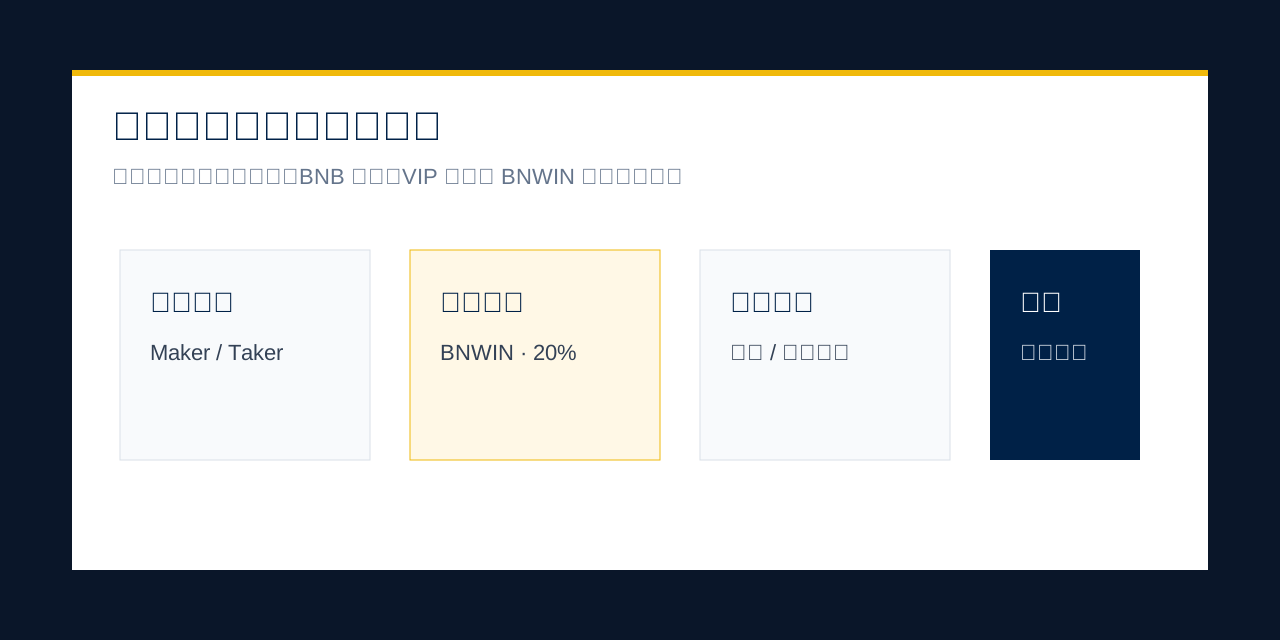
Trading cost control is not advanced theory. It is basic survival. If you trade spot in multiple entries, rebalance frequently, or use futures for short-term setups, fees keep taking money out of every cycle. The easiest cost win happens before you place the first order: use the correct signup path, attach the referral relationship, and learn which fee settings actually matter.
Search intents covered
This guide is written for users comparing:
- Binance fee discount and referral rebate options.
- Binance spot fees versus futures fees.
- BNWIN referral code, BNB fee payment, and VIP levels.
- Maker fees, taker fees, funding rates, and total trading cost.
- How a 20% Binance referral code path affects repeated trades.
What counts as Binance trading cost
Most users look at “fees” as if there is only one number. In practice, your cost comes from several layers. There is the base trading fee, which depends on the product and your account level. There is the way you execute the order, which affects whether you behave like a maker or a taker. There are settings such as BNB fee payment that can reduce cost. If you trade futures, there is also funding, which is separate from trading fees but still matters to your net result.
That is why the phrase Binance fee discount should be read broadly. It does not mean one secret toggle. It means a stack of choices: the signup route, the referral relationship, the fee payment option, and the way you trade.
| Cost layer | Where it appears | What beginners should check |
|---|---|---|
| Spot trading fee | Completed buy or sell trades | Executed value, fee rate, both sides of the trade |
| Futures trading fee | Opening and closing futures positions | Maker/taker rate and notional exposure |
| Funding | Perpetual futures positions | Funding direction, timing, and holding period |
| Spread and slippage | Market orders or thin order books | Depth, order size, and execution price |
| Referral and discounts | BNWIN, BNB fee payment, VIP levels | Whether they apply to the product being traded |
Spot trading fees: the baseline most beginners start with
How spot fees are charged
Every completed spot order has a cost. Binance charges the fee on the executed trade value, not on your profit. That means you pay even when the trade is flat or loses money. New users often learn this only after reviewing trade history and realizing the gross result and net result are different.
Why small traders should still care
Many beginners assume fee optimization only matters for large accounts. That misses the point. Smaller accounts feel cost drag faster because there is less room for mistakes. If you build a position in five entries and unwind in five exits, you are not making “one trade.” You are creating a chain of executions, and every execution matters.
Maker versus taker still matters
If your order adds liquidity and waits on the book, you may be treated as a maker. If your order executes against existing liquidity immediately, you act as a taker. The practical takeaway is simple: execution style affects cost. Do not force limit orders when speed matters, but do not ignore the difference either.
Futures fees: where cost discipline becomes more important
Futures traders pay attention faster
Futures users usually notice fees sooner because they trade more often, use larger notional exposure, and close positions more actively. A strategy can call the direction correctly and still underperform because the combined cost of entries, exits, and funding keeps eroding the edge.
Funding is not the same as the trading fee
This is one of the most common beginner mistakes. Funding is a payment exchanged between long and short positions on perpetual contracts. It is not the same thing as the fee Binance charges on execution. You need to watch both, but they come from different mechanics and require different responses.
Why referral rebate matters even more for futures
Futures trading compresses time and multiplies repetition. If the referral relationship reduces your effective cost under Binance rules, the impact is easier to feel because there are simply more paid events. Users running short-term systems, grid logic, or active hedging benefit from getting the initial account setup right.
How the Binance referral code 20% path affects fees
The referral relationship starts at registration
The biggest misconception is that rebate settings can always be fixed later. Usually they cannot. The route used during account creation establishes the referral relationship. That is why HoldWins points users to a Binance official registration path carrying code BNWIN. It is not about hype. It is about preserving a fee advantage from the first day of the account.
Rebate and base fee are different layers
Your account still has a fee schedule. The referral relationship does not erase that schedule. It changes your effective cost through a rebate structure governed by Binance rules. Once you understand that separation, the whole fee model becomes easier to reason about.
Long-term value beats one-time promotions
A lasting rebate path is more useful than chasing random short-lived campaigns. If you plan to trade for months, the account structure matters more than the excitement around a short promotion. Sustainable cost reduction is boring on day one and powerful after month six.
VIP levels: useful, but not your first move
What VIP levels do
Higher VIP tiers can reduce the base fee schedule based on activity, assets, and other platform conditions. That matters for serious volume, but it should not be the first thing a beginner obsesses over.
Why beginners should not chase VIP by overtrading
Trading more just to save on fees is backwards. If you create unnecessary orders to hit a threshold, you may pay more in spread, slippage, and bad entries than you ever recover in fee reduction. First build clean habits. Let genuine activity drive level improvements later.
VIP and referral rebate can work together
These are not mutually exclusive ideas. A user can still benefit from the referral path while account activity evolves over time. That is another reason to start with the correct registration flow instead of assuming you will optimize later.
Settings that directly lower your effective cost
| Priority | Action | Why it comes first |
|---|---|---|
| 1 | Start with the correct referral route | The signup event is hard to repair later |
| 2 | Review BNB fee payment | It can affect the way fees are deducted |
| 3 | Learn maker versus taker | Execution style affects cost |
| 4 | Cut unnecessary trades | Fewer weak trades means fewer paid mistakes |
| 5 | Recheck fee settings regularly | Account levels and rules can change |
1. Use the right signup route from the start
This is the cleanest win because it happens before you trade. If the referral path is wrong, many later savings opportunities shrink or disappear.
2. Review BNB fee payment settings
Many users never touch this setting and pay more than necessary. If the option fits your account style, it is one of the simplest cost reductions available.
3. Reduce unnecessary trades
The cheapest trade is often the one you never had to place. Chasing candles, panic-flipping positions, and entering without a plan create fee drag faster than most users expect.
4. Match execution style to strategy
If your setup requires immediate confirmation, paying taker cost may be justified. If your strategy allows patient entries, limit logic can make sense. Cost control should fit the method, not fight it.
5. Recheck the account cost structure regularly
Fee settings, trading habits, and product mix change over time. Review them. A stale setup quietly becomes an expensive setup.
Mistakes that keep users paying more
Assuming the fee is too small to matter
That only sounds true when you ignore repetition. On active accounts, repetition is the whole story.
Thinking rebates can always be added later
Usually they cannot. The registration event is where the relationship is created.
Focusing only on the headline fee rate
A user can have an acceptable posted rate and still trade inefficiently enough to pay far too much overall. Execution behavior matters.
Confusing funding with fees
They both affect outcome, but they are not the same line item and should not be managed as if they are.
FAQ
Are Binance fees charged only when a trade is profitable?
No. Trading fees are generally based on executed trade value, not profit. A flat or losing trade can still generate fees.
Does a 20% referral rebate guarantee profit?
No. A rebate can affect part of the cost stack, but it does not reduce market risk, leverage risk, liquidation risk, liquidity risk, or platform rule changes.
Should beginners chase VIP levels first?
Usually no. Beginners should first preserve the referral route, understand fee settings, and avoid unnecessary trades. VIP levels matter more after genuine activity grows.
A practical cost-control order for beginners
If you are new, keep the process direct. Register Binance through the correct official route so the referral relationship is established. Finish KYC and security. Review the fee page. Decide whether BNB fee payment makes sense for you. Learn the difference between spot and futures costs before you move size. That order prevents the most common and expensive mistakes.
If you already have an account, start by reviewing your own history. Look at how many trades you made in the last month and how much total cost you paid. Once you see the real number, fee optimization stops feeling optional.
Open Binance With the Correct Referral Path
Use the HoldWins route to reach Binance official signup with referral code BNWIN and start with a cleaner fee structure. Register Binance Now
Start With The Right Link