
How to Buy S&P 500 SPY | SPYUSDT Price Exposure Guide 2026
You have three ways to get S&P 500 exposure: buy SPY ETF through a US broker, buy index funds through a fund platform, or trade SPYUSDT on Binance via TradFi Perps. All three give you US large-cap direction, but the products are fundamentally different.
Want full ETF ownership logic? → Broker. Want long-term passive allocation? → Funds. Already use Binance and USDT, want fast S&P 500 price tracking? → SPYUSDT is the shortest path.
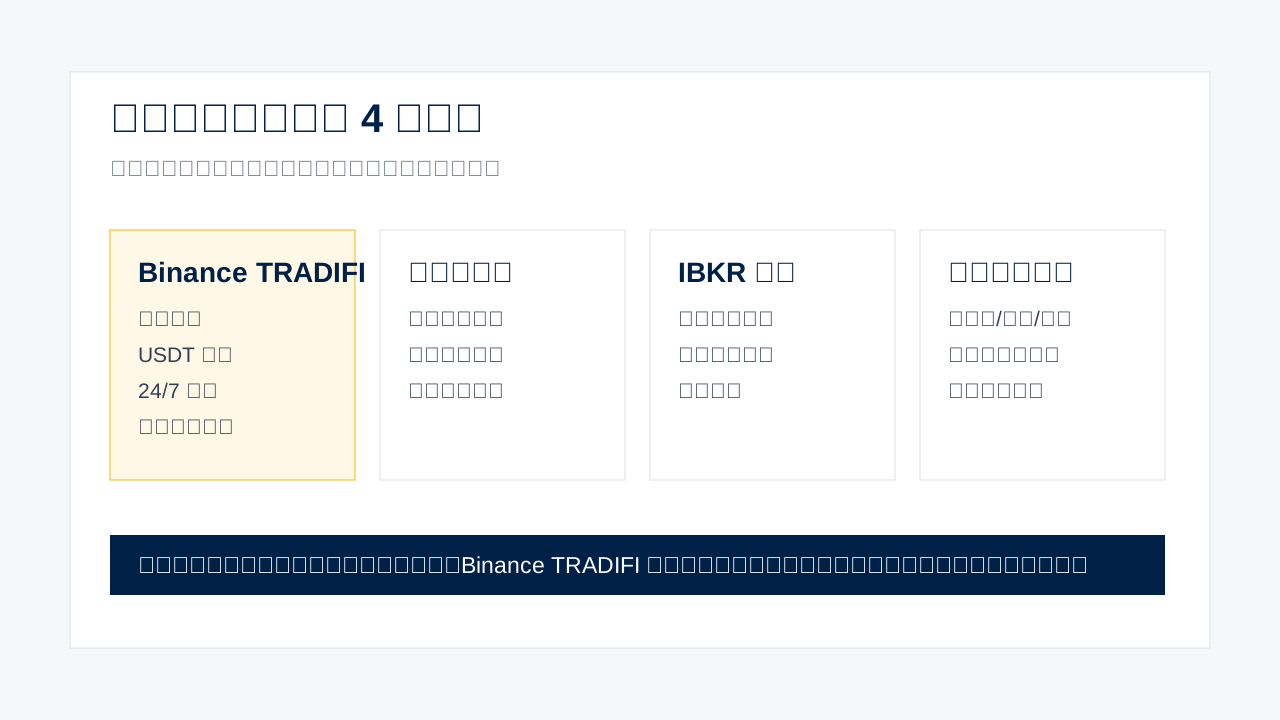
Three S&P 500 Paths Compared
| Path | Product type | Best for | Main limitation |
|---|---|---|---|
| US broker → SPY ETF | Native ETF | Long-term securities account users | Account setup, funding, trading hours |
| Fund platform → index funds | Fund subscription | Passive allocators | No real-time trading, NAV lag |
| Binance SPYUSDT | ETF-linked price exposure / TradFi Perps | Binance + USDT users | Not SPY ETF shares |
How to Trade SPYUSDT on Binance
- Register via HoldWins link — referral code BNPRIME auto-applied.
- Complete KYC, 2FA, anti-phishing code, device security.
- Prepare USDT, test with a small amount.
- Search SPYUSDT in the trading interface.
- Check leverage, funding rate, fees, min order size, regional availability.
- Confirm: this is price exposure, not SPY ETF shares.
Who Should Use SPYUSDT?
SPYUSDT suits traders who want fast US large-cap price tracking, are comfortable with Binance, and accept TradFi Perps product boundaries. It does NOT suit those treating it as a traditional ETF for long-term equity holding.
If this is your first time with US market exposure, SPYUSDT is usually easier to understand than single-stock pairs — it represents the broader market. But it may still carry leverage, fees, funding rates, and platform risks. It is not a low-risk savings vehicle.
Official Resources
See Binance Academy: TradFi definition, ETF-linked perpetual contracts.
FAQ
How can I get S&P 500 exposure?
Traditional: SPY ETF via broker. Faster: SPYUSDT on Binance.
Does SPYUSDT equal holding SPY ETF?
No. It’s a USDT-settled perpetual contract tracking S&P 500 direction, not ETF shares.
What’s the difference between SPYUSDT and QQQUSDT?
SPYUSDT = broader S&P 500. QQQUSDT = tech-heavy Nasdaq-100. Different risk profiles — review product rules before trading.